Clients are showing up having already asked AI about their situation and treating the answer as legal advice. How do you explain the risks and expectations around what AI can and can’t do?
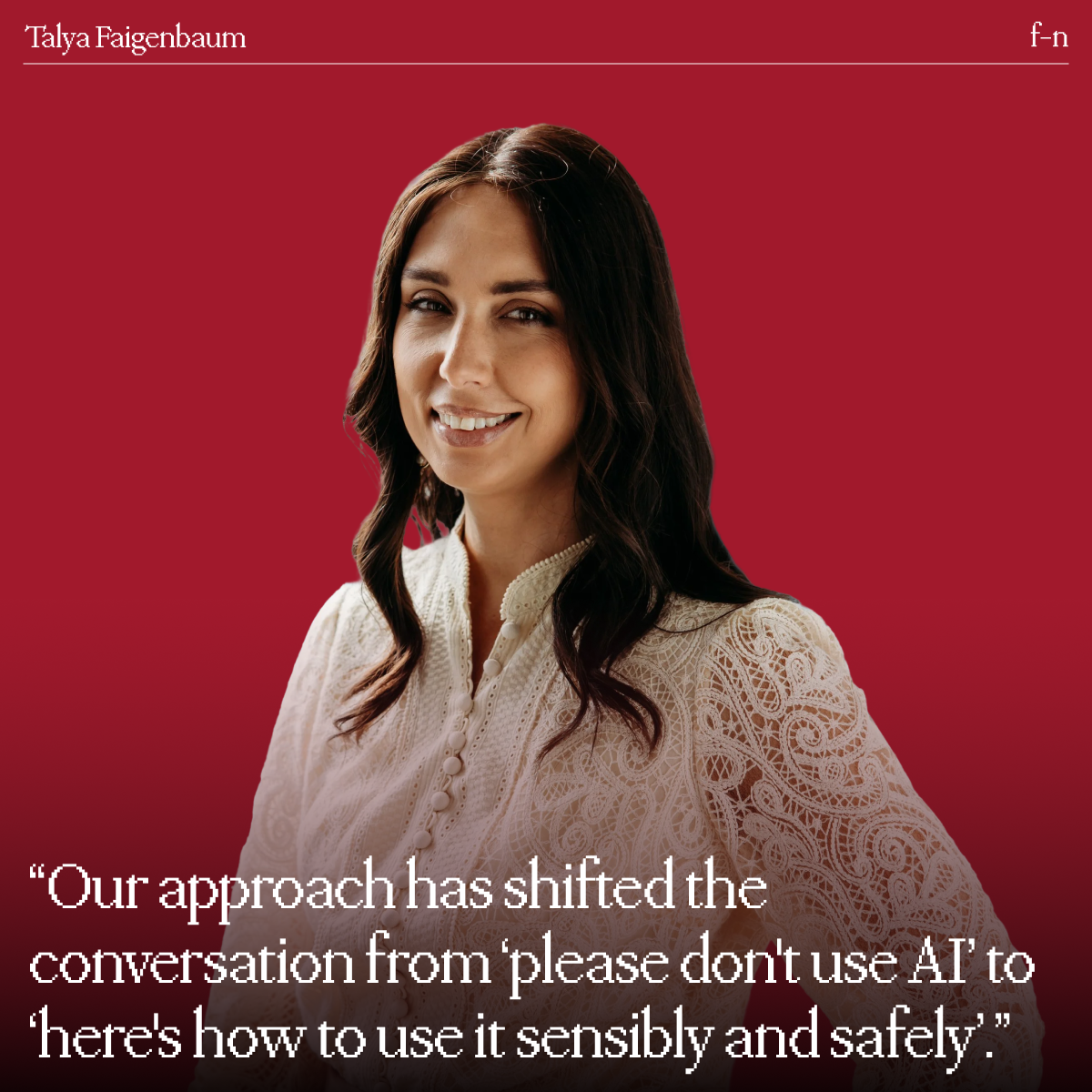
Talya Faigenbaum
Managing Director at Nest Legal
We recognise that AI can be genuinely helpful for organising thoughts, preparing questions and understanding broad legal concepts. But we also need to educate clients about using these tools safely, particularly around privacy, confidentiality, privilege and accuracy and steer them away from treating AI-generated answers as legal advice.
At Nest Legal, we've tackled this by giving clients a simple AI safe-use guide, which goes out with our initial engagement letters and resource packs.
For family law matters that become litigious, we send it again before clients begin preparing, gathering or reviewing court material, with a very firm reminder not to upload or share any part of their draft court documents with general-purpose public AI tools.
We’ve tried to strike the right balance by giving our clients a handful of practical guardrails that they can actually use:
- We warn clients that entering information about their legal matter into public AI tools can mean losing control over that information and may create confidentiality or privilege risks.
- We tell clients not to upload legal advice, contracts, court documents, correspondence or other sensitive material and to use only small, de-identified snippets where appropriate.
- We explain that information entered into AI tools may be stored, shared, processed overseas or used in ways the client does not expect, so privacy settings and account security all matter.
- We remind clients that AI can get the law wrong, be out of date, apply the law from the wrong jurisdiction or simply make things up (often very convincingly).
- We encourage clients to let us know if they have used AI for research, drafting or preparing material connected with their matter, and to ask us if they are unsure before using it. That allows us to identify any risks or errors early.
Our approach has shifted the conversation from "please don't use AI" to "here's how to use it sensibly and safely, without compromising your position or inadvertently creating more work, cost or confusion".

Bron O’Loan
CEO and Founder at O’Loan Family Law
I start by acknowledging the effort. I will often say, “It’s good that you’ve researched this and taken some agency over your situation.” Then I draw a clear line between general information and legal advice.
Recently, a client gave us an AI-generated summary of what they believed they were entitled to in a financial settlement. Some of it was correct. One crucial point was not. The response said the family trust would be excluded from the balance sheet.
Trusts are a nuanced area of family law. Their treatment turns on the particular structure, history and circumstances. Getting that point wrong could make a significant difference to the client’s outcome. We explained our concern and gathered more information before advising them.
That is the risk. AI can produce a polished answer that feels complete, despite missing facts and context. Clients can mistake fluency for accuracy. It also cannot weigh the available pathways and give an informed legal opinion about which option best serves that particular client.
AI still has a useful place. It can explain basic terminology, summarise general information, suggest questions for a lawyer, prepare a document checklist and reduce some of the initial overwhelm.
Used properly, technology takes care of some of the more time-consuming groundwork. Our lawyers can then spend more time on the work clients actually need us for: considering strategy, explaining their options, testing risk and guiding them towards the right decision for their circumstances.
My message to clients is simple. Use AI to arrive better prepared, not to decide your legal position.